The logistics are the easy part. The family part is harder.
This page is about the emotional side of the journey: the strain on adult children, the parent who says no, the siblings who disagree, and the guilt and worry that come with all of it. It is also about how to have the hard conversations, and how our team helps carry the weight so your family can stay family.
The weight adult children carry is rarely talked about, and it is heavy.
The strain of being the one who notices
You see the fall risk, the unpaid bill, the isolation, long before anyone else does. You carry the worry alone because you do not want to start a fight, and that quiet strain wears on you more than you admit. It is not your fault, and you are not alone in it.
The guilt of every option
Sell the house and you are taking away their home. Stay and you worry every night. Move them closer and you are uprooting their life. Every path feels like a betrayal to someone, and the guilt is exhausting. Guilt is not proof you are wrong. It is proof you care.
The worry that never switches off
Even on the good days, part of you is scanning for what comes next: the next fall, the next bill, the next call. That low-grade, always-on worry is one of the heaviest parts of this journey, and it deserves to be named instead of carried silently.
Feeling all of this does not make you a difficult child. It makes you a devoted one.
Most of the families we meet arrive tired, worried, and a little bit at war with themselves. That is the normal shape of this decision, and it is exactly where our help begins.
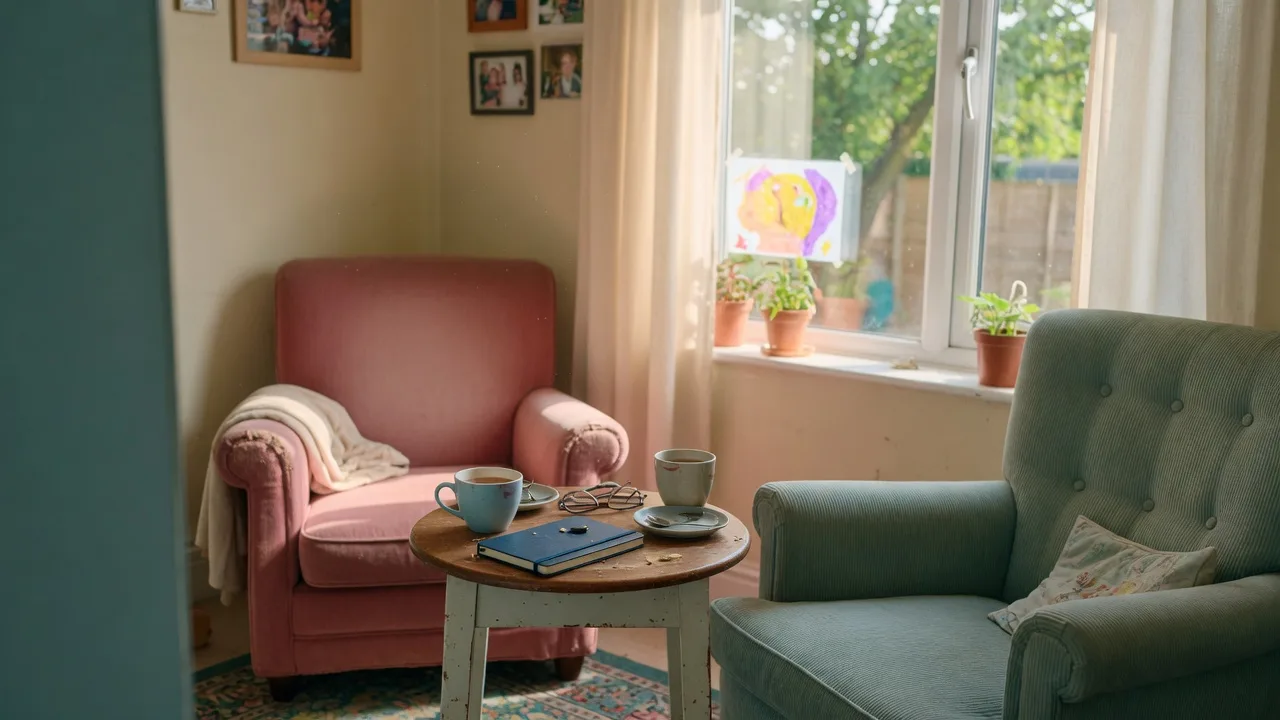
When Mom says no
Refusing help is rarely about the house. It is about control, fear, and dignity.
When a parent is defiant, dismisses your concerns, or flatly refuses to move or accept help, it is easy to hear it as rejection. It is usually not. After a lifetime of deciding, being told what to do can feel like being demoted in their own life. The house is tied to who they are: the parent, the provider, the one who raised a family there. And accepting help can feel, to them, like admitting they can no longer manage.
- Control: after a lifetime of deciding, being told what to do feels like losing their place in their own life.
- Fear: of the unknown, of losing the familiar, of what a move might say about their age or their health.
- Identity: the house is the proof of a life built, and leaving it can feel like erasing it.
- Dignity: for a generation that prides itself on independence, accepting help can feel like admitting failure.
None of this means you are wrong to be concerned. It means the conversation has to start with their feelings, not your facts. Facts persuade a willing listener. Feelings open the door to one.
You grew up in the same house. You are not having the same conversation.
The same house, different memories
One sibling sees the childhood home; another sees a liability. Both are right, and neither is wrong. The house means something different to everyone who grew up in it.
Different distances, different information
The sibling who lives nearby sees the daily reality: the clutter, the missed steps, the worry. The out-of-town sibling visits on good days and hears the parent at their best.
Money talks in different ways
One sibling carries the financial weight and feels entitled to decide. Another sees only the cost. Money unspoken becomes a family legend, and legends are hard to argue with.
The parent filters the message
Parents tell different children different things, often to protect each of them. The result is siblings fighting over a picture of reality that none of them fully has.
Disagreement is normal. It becomes a problem only when there is no structure for it.
A neutral third party gives the family that structure: the same facts at the same time, named roles, and a process for deciding, so the fight stays about the decision and not about each other.
How to talk to a parent who does not want to move or accept help.
These are gentle starting points, not scripts to recite word for word. The goal of the first conversation is not agreement. It is to keep the door open and the relationship intact.
Start with curiosity, not conclusions
Ask before you tell. Questions invite your parent to be heard instead of managed.
Try saying
“Mom, I have been thinking about the house, and I would love to understand how you feel about it. What do you love most about living here? What has gotten harder this year?”
Name the worry as yours, not theirs
Own the concern instead of assigning it. It keeps the conversation loving instead of accusatory.
Try saying
“I worry about you at night when I am not here. I am not trying to take anything away from you. I want to figure this out together so we can both sleep better.”
Offer a first step, not a verdict
Nobody decides anything today. A small, reversible step is far less frightening than a move.
Try saying
“Nothing is being decided today. What if we simply had someone come look at the house and tell us what they see? No commitment, no moving trucks, just information.”
Bring in a neutral third person
A professional with no history in the family can say the hard things and be heard differently.
Try saying
“I love you, and I do not want us to fight about this. What if we talked to someone who does this every day and has no stake in it? We can all hear the same facts together.”
Leave the door open
Pressure closes conversations. An open door means the conversation can happen again, and again, until it is ready.
Try saying
“You do not have to answer today. Think about it, and we can talk again whenever you are ready. I am not going anywhere.”
Ask permission before giving advice
Unsolicited advice reads as criticism. Permission turns advice into partnership.
Try saying
“I have some ideas, but I do not want to push them on you. Would it be okay if I shared what I have been thinking, and you tell me what sounds off?”
One conversation will not settle it. That is okay.
Families that make progress treat this as a series of small conversations over weeks, not one showdown. Every open door is a win, even when nothing is decided.
The neutral third party
We can say the hard things so you do not have to.
When a parent hears a hard truth from a child, it can land as betrayal. Heard from an experienced professional with no history in the family, the same truth lands as information. That is the role our team plays: the neutral, experienced third party who can name what needs naming, carry the logistics, and take the pressure off the relationships that matter most.
- We have no stake in the family's history, only in a good outcome. We are not carrying old resentments, and we are not taking sides.
- We say the hard things plainly, with care: when a home is no longer safe, when staying is no longer practical, when a community is the honest answer.
- We carry the logistics, the pricing, the prep, the tours, the paperwork, so the family can spend its energy being family instead of fighting over details.
- The decision stays with your family. We make sure it is made well, and made together, not made alone and not made against each other.

So the family can stay family.
After a move or a sale, the relationships are what remain. Our job is to make sure the decision does not cost you the people you made it for.
Three free guides built for the emotional side of the journey. Request any of them and we will include it in your follow-up, no obligation.
When Mom Says No: A Family Guide
Why parents refuse help, how to hear the no without hearing rejection, and how to keep the conversation open.
Get the free guideThe Sibling Agreement Checklist
Get every sibling on the same page: shared facts, named roles, honest money, and a process for deciding.
Get the free guideThe Family Meeting Guide
How to run a family meeting that stays productive: who attends, what gets decided, and how to keep the parent at the center.
Get the free guideRead more on the emotional side
The article library covers the same ground: talking with a parent about selling the family home, involving siblings in the decision, and helping from out of state.
You do not have to carry this alone.
The first conversation is free, and you do not need to know the answer before you call. Whether the hard conversation has not happened yet or has already gone sideways, that is exactly where we start.